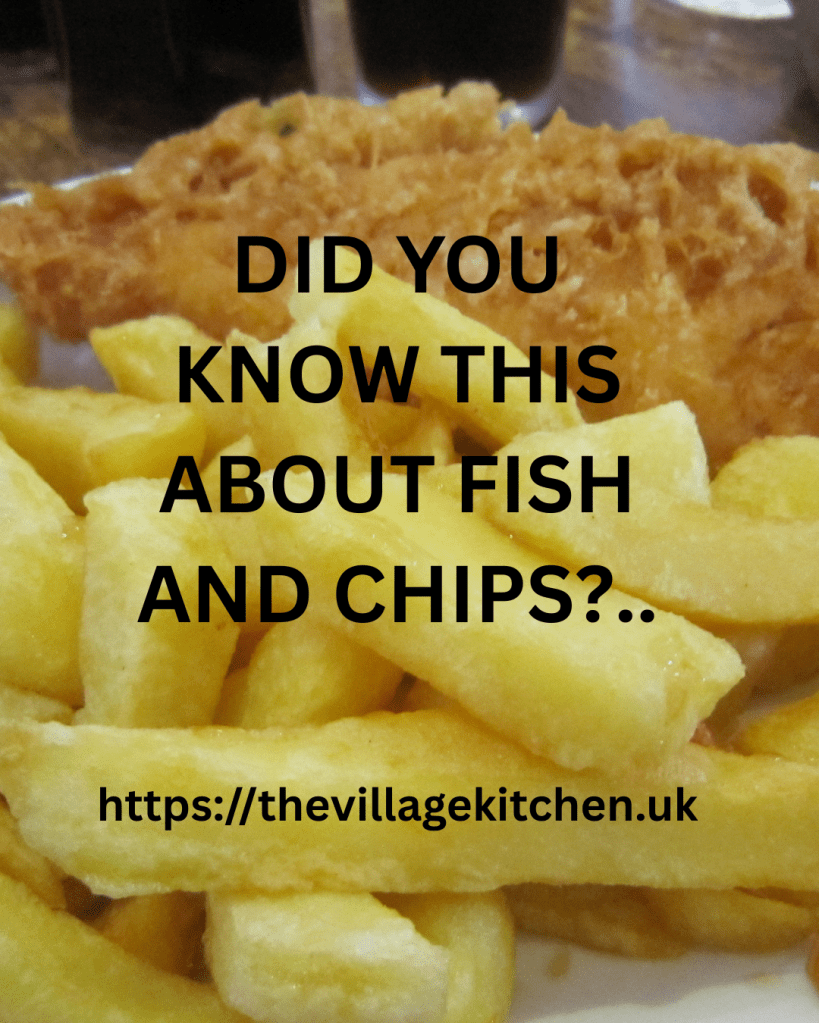
It is the quintessential British comfort food, a staple of seaside holidays, and a Friday night tradition for millions. However, the story of fish and chips is not as purely British as one might think. It is actually a tale of migration, industrial innovation, and a happy culinary marriage between two very different cultures.
The “fish” part of the equation arrived in the UK long before the chips. During the 16th century, Sephardic Jews fleeing persecution in Portugal and Spain settled in England. They brought with them a technique for coating fish in flour and frying it in oil. This method kept the fish preserved so it could be eaten cold the following day during the Sabbath. By the 19th century, “fried fish in the Jewish fashion” was a common sight on the streets of London, even gaining a mention in Charles Dickens’s Oliver Twist.
Historic UK say that the potato is thought to have been brought into England from the New World of the 17th century by Sir Walter Raleigh although it is believed that it was the French who invented the fried potato chip.
In 1839 Charles Dickens referred to a ‘fried fish warehouse‘ in his novel, ‘Oliver Twist‘. The first fish and chip shop is believed to have been in Mossely, Lancashire in the North of England. It was sold from a wooden hut in the market and then later transferred to a permanent shop which had an inscription on its window which said ‘ this is the first fish and chip shop in the world’.
Towards the latter part of the 19th century and well into the next century, the fish and chip trade expanded satisfying the needs of the growing industrial population of the UK. Then the steam trawler brought fish from all over the North Atlantic, Iceland and Greenland and the steam railways meant the fish was distributed easily around the country.
By the early 20th century, fish and chip shops (or “chippies”) were on almost every street corner. The dish was so vital to the British psyche that it was one of the few foods never rationed during World War I or World War II. It was seen as the “good companions” that kept morale high during the darkest days of the conflict.
Apparently in 1931 fish and chips became so essential in the British diet that one shop in Bradford had to employ a doorman to control the queue at busy times. Even the Territorial Army enjoyed it with special catering tents erected at training camps in order to give them fish and chips before battle.
Source Historic UK

 THE VILLAGE KITCHEN